DEFINE THE JOB
Design around contact, load and repeat use.
A useful fixture must hold the workpiece consistently through its intended operation. Material choice, section thickness and load path work together. For repeated contact, a printed frame with a metal bushing or replaceable pad can be worth evaluating alongside an all-polymer design.
Typical project questions
- Assembly locators and work-holding aids.
- Inspection nests and repeatable positioning tools.
- Soft interfaces or replaceable protective jaws.
Material systems worth evaluating.
These are selection directions. Compare current exact-grade data and confirm the installed process before approving a material.
| Material direction | Why review it | What still needs checking |
|---|---|---|
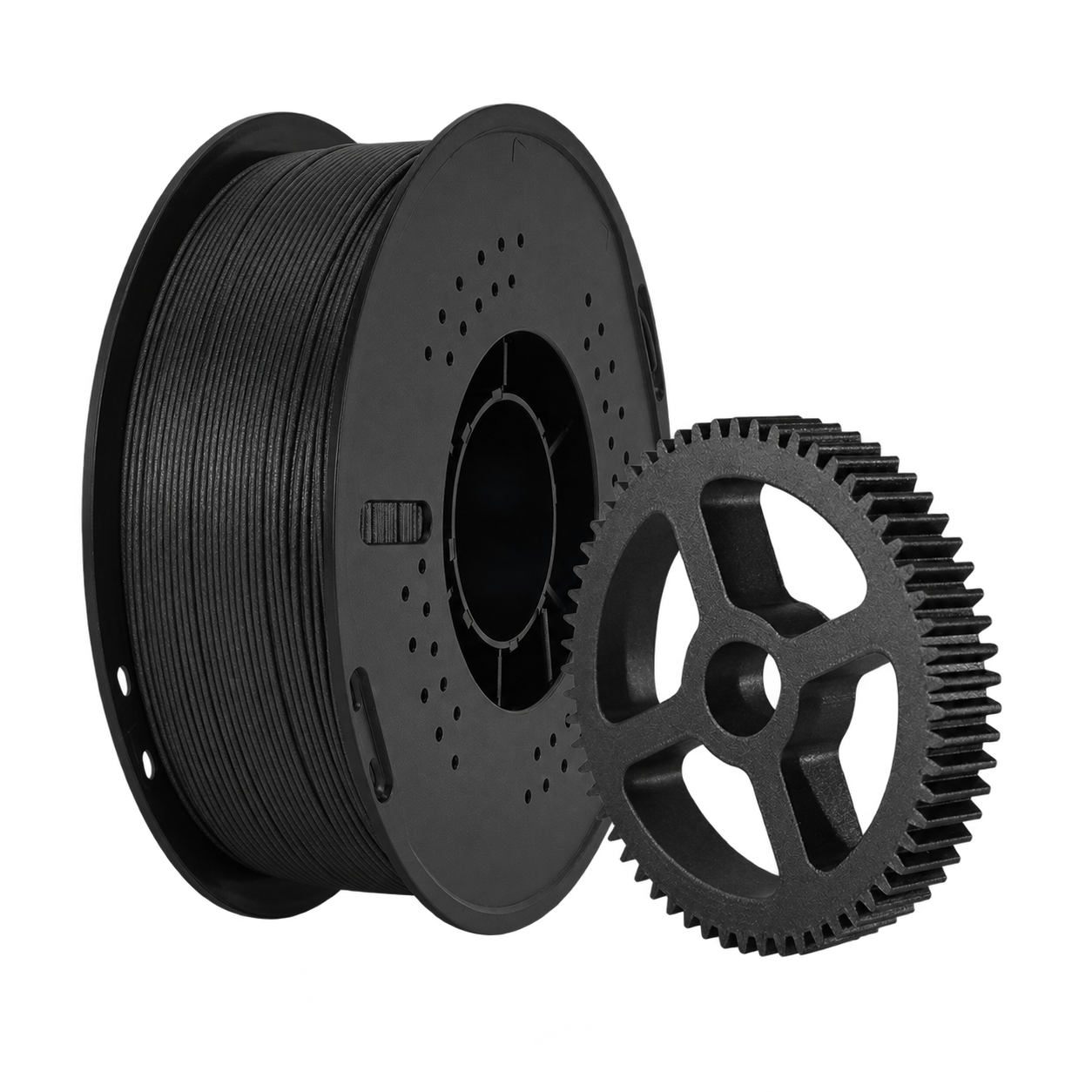
| Reinforced engineering filament | Stiff frames and repeatable geometry | Nozzle wear, moisture, orientation and creep |
| PA12 SLS | Complex nests and integrated features | Contact wear, dimensions and powder process |
| Specialty engineering resin | Detailed contact or interface geometry | Cure condition, repeated load and service environment |
A practical trial and approval sequence.
Check the loaded geometry
Measure locating faces and displacement under the real clamping condition.
Run a representative cycle
Include repeated placement, cleaning and the expected contact temperature.
Define the maintenance boundary
Agree which pads, bushings or printed tools are replaced after wear.
Details to resolve early
- High stiffness alone does not establish resistance to long loaded dwell.
- Place supports or seams away from critical contact surfaces where the process allows.
- Test cleaning-fluid contact with the actual concentration, temperature and exposure.
What to put in your inquiry.
Replace the bracketed fields with your project details.
Application: [assembly/inspection] fixture. Workpiece/contact surfaces: [description]. Clamping load/dwell: [values]. Required locating tolerance: [value/method]. Temperature and cleaning exposure: [conditions]. Machine: [model]. Expected cycles: [target]. Please quote a trial grade and relevant test/document options.
Buyer questions
Can a printed jig be used directly for a high-force operation?
Review the load, geometry, attachment and test plan for that operation. An application-specific design review and validation may be needed.
Will carbon-filled nylon solve a bending problem?
It may be a useful candidate, but the section geometry, load path, conditioning and creep behavior still need review.
Sources
- Formlabs — jigs, fixtures and manufacturing aids
Design, loading, inspection and service conditions for manufacturing aids.
- Prusa — fiber-filled composites
Abrasive reinforcement and hardware requirements; use grade-specific settings.